
When it comes to newborns, every little detail matters, especially those tiny ears that can hear the world for the first time. Imagine a baby’s first response to a soothing lullaby or the sound of laughter that fills the room. Newborn hearing isn’t just about detecting sounds; it’s about laying the foundation for communication and connection.
Understanding Newborn Hearing
Newborn hearing plays a crucial role in a baby’s development. A child’s ability to hear affects early communication and bonds with caregivers.
Importance of Early Detection
Early detection of hearing loss allows for timely interventions. Screening newborns within the first month of life helps identify potential issues. Research indicates that prompt action can improve language skills and social interaction. The American Academy of Pediatrics recommends universal newborn hearing screening. This practice ensures most babies receive necessary evaluations before their first birthday.
Impact on Development
Hearing impacts various aspects of development. Babies exposed to sounds from an early age develop better speech and language skills. Communication with caregivers enhances emotional connections and cognitive growth. Studies show that children who experience hearing impairments without early intervention may face educational challenges. They often struggle with social integration and learning opportunities. Supporting auditory experiences lays the foundation for healthy relationships and overall development.
Methods of Hearing Screening
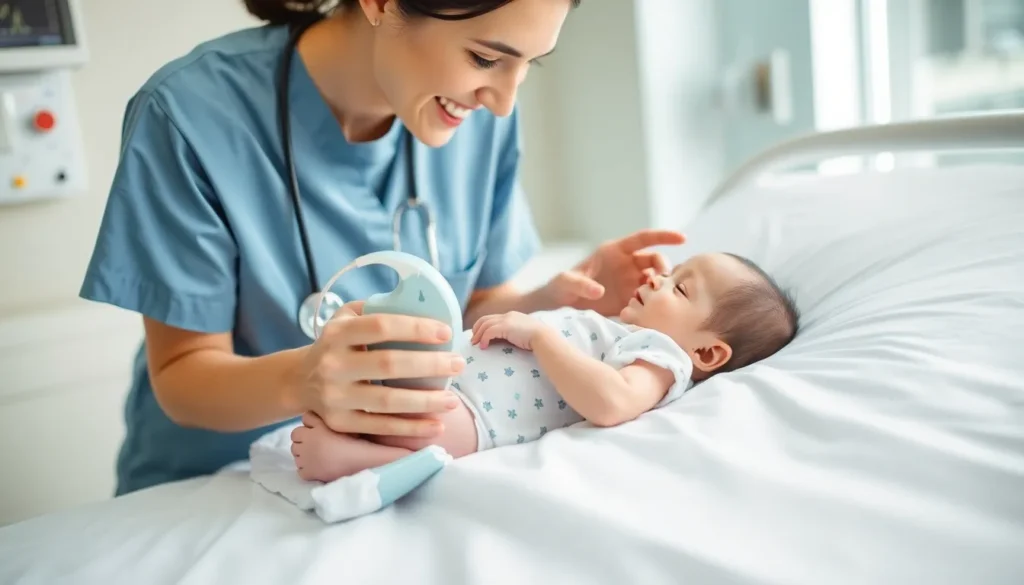
Newborn hearing screening methods are vital for early detection of hearing loss. Implementing these methods ensures timely intervention and promotes healthy development.
Universal Newborn Hearing Screening
Universal newborn hearing screening occurs shortly after birth, often before the infant leaves the hospital. This screening utilizes objective tests, like otoacoustic emissions (OAEs) and auditory brainstem response (ABR) tests, to evaluate hearing abilities. OAEs measure sound waves produced in the inner ear. ABR assesses brain responses to sound stimuli. Research confirms that early identification of hearing loss enhances language development. Approximately 90% of babies screened pass the tests, minimizing delays in auditory experiences.
Follow-Up Evaluations
Follow-up evaluations are crucial for infants who do not pass initial screenings. These assessments determine the extent of hearing loss and facilitate appropriate intervention options. Audiologists conduct comprehensive tests to gauge hearing function. Early evaluations, performed by six months, significantly improve outcomes for children diagnosed with hearing impairments. A positive environment with consistent follow-up contributes to successful auditory development. Engaging caregivers during evaluations increases awareness and support for further actions.
Common Hearing Issues in Newborns
Newborns may experience various hearing issues that affect their development. Understanding these conditions is crucial for early intervention.
Congenital Hearing Loss
Congenital hearing loss arises at birth or before it. This condition affects approximately 1 to 3 of every 1,000 newborns. Genetic factors often play a significant role, with about 50% of cases linked to hereditary factors. In some instances, associated syndromes contribute to hearing impairment. Identifying congenital hearing loss early is essential for implementing timely interventions. Newborns diagnosed with this condition show improved language and social skills when they receive early support.
Acquired Hearing Loss
Acquired hearing loss occurs after birth due to external factors. These factors can include infections like meningitis, exposure to ototoxic medications, or physical trauma. The likelihood of developing hearing loss from these causes increases during infancy. Infections affect the auditory system, potentially leading to permanent hearing impairment. Monitoring newborns for signs of hearing loss remains vital, as early diagnosis facilitates appropriate treatments. Timely intervention enhances overall developmental outcomes for affected children.
Interventions and Treatments
Newborn hearing interventions and treatments play a crucial role in fostering communication and development. Timely support enhances language acquisition and social skills.
Hearing Aids and Assistive Devices
Hearing aids significantly assist infants diagnosed with hearing loss. These devices amplify sounds, allowing babies to perceive environmental noises and speech. Various types of hearing aids cater to different degrees of hearing impairments. For instance, behind-the-ear (BTE) hearing aids are commonly recommended due to their effectiveness. Cochlear implants provide another option, especially for cases where hearing aids are insufficient. Research indicates that around 50% of children with hearing loss benefit from hearing aids after appropriate fitting and training. Such support can greatly influence a child’s auditory experiences during crucial developmental stages.
Early Intervention Programs
Early intervention programs target infants with hearing impairments to encourage optimal language and social development. These programs typically begin immediately after diagnosis, ensuring timely support. Families receive guidance on using hearing aids and fostering auditory skills. Specialized therapists conduct sessions to enhance communication abilities and promote social interactions. Evidence shows that children who participate in these programs demonstrate improved language skills and emotional connections with caregivers. Engaging parents in the process also enhances the effectiveness of interventions, creating a dynamic support system for the child’s growth.
Parental Guidance and Support
Newborn hearing is critical for early development. Parents play a vital role in supporting their baby’s auditory experiences and interventions.
Resources for Parents
Access to resources empowers parents during this crucial time. The Centers for Disease Control and Prevention offers information on newborn hearing screenings and developmental milestones. Local hospitals and early intervention centers provide support networks, such as counseling and workshops. Parent-to-parent support groups allow sharing experiences and strategies, enhancing confidence in managing hearing challenges. Websites like the Hearing Loss Association of America offer valuable materials on hearing loss awareness and advocacy. Books and audiobooks focusing on communication techniques and parenting tips further equip parents to navigate their child’s hearing journey effectively.
Communication Strategies
Effective communication strategies foster connections between parents and their babies. Using visual cues, like gestures and facial expressions, enhances understanding for infants with hearing impairments. Speaking clearly while maintaining eye contact engages babies and promotes interaction. Incorporating music and rhythm into daily routines builds auditory awareness, with lullabies fostering comfort and bonding. Consistent routines help babies anticipate sounds and sights, creating a sense of security. Encouraging playtime with sound-producing toys aids in exploring auditory experiences. Collaborating with speech therapists ensures personalized communication plans that align with each child’s needs, promoting their overall development.
Newborn hearing is a vital aspect of early development that shapes communication and emotional connections. By prioritizing universal hearing screenings and timely interventions, parents and caregivers can significantly enhance their child’s language skills and social interactions. The journey toward effective communication begins with the sounds that surround a newborn, making it essential to monitor and support their auditory experiences.
With the right resources and guidance, families can navigate hearing challenges and foster an environment conducive to growth. Early detection and intervention not only improve developmental outcomes but also lay the foundation for healthy relationships and future success. Investing in a child’s hearing health is an investment in their overall well-being and potential.


