
Once the proud home of the Sears Roebuck Company, the iconic skyscraper in Chicago has undergone a name change that might leave some scratching their heads. Known for years as the Sears Tower, this architectural giant now goes by the name Willis Tower. It’s like that friend who suddenly decides to go by a nickname that nobody can quite get used to.
Overview of the Sears Tower
The Sears Tower, now known as Willis Tower, stands as one of Chicago’s most iconic landmarks. Completed in 1973, this skyscraper features a height of 1,450 feet, with 110 stories that define the city’s skyline. Originally named after the Sears Roebuck and Company, the building’s association with the retail giant marked its significance in American business history.
In July 2009, the name transitioned to Willis Tower following a leasing agreement with the Willis Group Holdings. This renaming signaled a shift in branding and identity for both the skyscraper and its corporate sponsor. The public impact of the name change created mixed reactions, much like adjusting to a friend’s new nickname.
Visitors frequent Willis Tower to experience the Skydeck, located on the 103rd floor. The observation deck provides breathtaking views of up to 50 miles on clear days. Innovative features such as the Skydeck Ledge allow guests to step onto glass boxes that extend out from the building, enhancing the thrill of the experience.
Numerous amenities contribute to the building’s ongoing appeal. Office spaces encompass 3.8 million square feet, attracting various tenants. Renovations have secured Willis Tower’s status as a top-tier destination for businesses and tourists alike.
Notably, the design incorporates modern sustainability practices, aligning with contemporary architectural standards. Elevators throughout the building include advanced technology for efficiency. As Willis Tower continues to symbolize Chicago’s architectural prowess, it remains a vital part of the city’s narrative, reflecting changes in urban development and corporate identity.
Historical Background
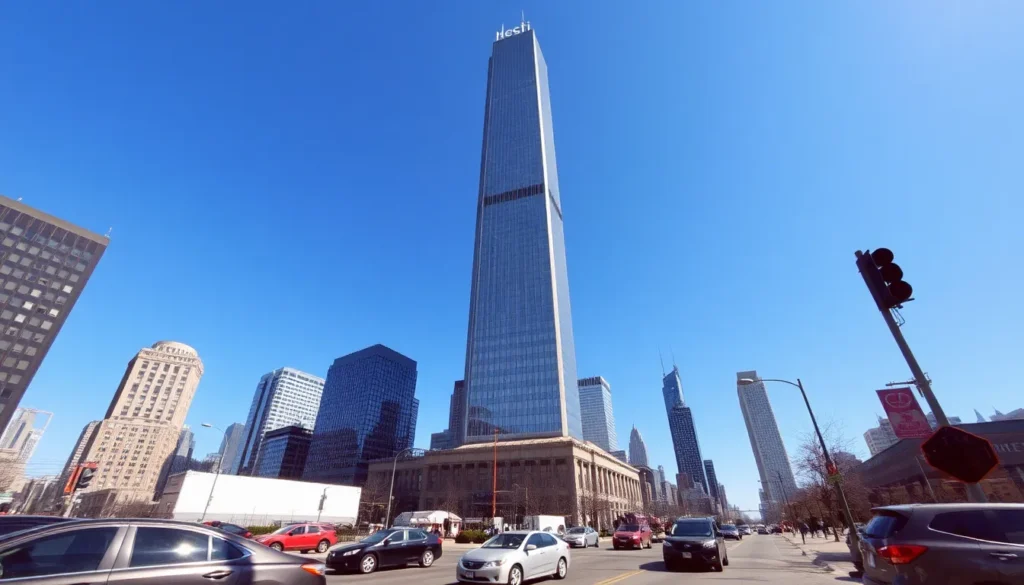
The Willis Tower, previously known as the Sears Tower, has a rich history that reflects both architectural innovation and corporate evolution.
Construction and Original Name
Constructed between 1970 and 1973, the tower emerged as a key figure in Chicago’s skyline. At 1,450 feet tall with 110 stories, it was the tallest building in the world upon completion. The original name honored the Sears Roebuck and Company, representing the company’s significance in American commerce. Designed by architect Bruce Graham and structural engineer Fazlur Rahman Khan, this architectural feat utilized a unique bundled-tube design, allowing for a sleek silhouette.
Name Change to Willis Tower
The transition to Willis Tower occurred in July 2009, following a leasing agreement with Willis Group Holdings. This new name marked a shift in branding for the iconic structure, stirring mixed reactions among the public. Locals and visitors alike found the name change challenging, much like adapting to a friend’s new nickname. Despite the initial backlash, the building retained its role as a major landmark, symbolizing corporate identity in Chicago.
Significance of the Name Change
The name change from Sears Tower to Willis Tower holds significant meaning for both the building and the city. This transition reflects evolving corporate identities as businesses adapt to modern landscapes.
Impact on Chicago’s Skyline
Chicago’s skyline visibly transformed with the name change. Willis Tower maintains its status as a prominent feature among the city’s architecture. Tourists and locals alike recognize its silhouette, which contributes to the iconic representation of Chicago. The building’s height and unique design make it a distinct landmark. With a height of 1,450 feet, its dramatic presence continues to define the urban landscape. The structure’s modern name signifies its role as a hub for international business and innovation while honoring its historical significance.
Public Perception and Reception
Public perception of the name change reflects a mix of nostalgia and acceptance. Many Chicagoans still reference the building as Sears Tower, illustrating an emotional connection to the name. This sentiment contrasts with the growing recognition of Willis Tower in business-related contexts. Feedback shows a gradual shift as newer generations adapt to the new branding. Social media discussions often highlight this transition, showcasing varying perspectives regarding the name change. Recent polls indicate increased familiarity with the Willis name and its association with corporate entities. Hence, public reception has evolved, underscoring the building’s enduring significance in the city.
Current Usage and Features
Willis Tower remains a crucial asset in Chicago’s skyline, serving both businesses and tourists alike.
Office Space and Tenants
Office spaces within Willis Tower total 3.8 million square feet. Major corporations, including United Airlines and law firms like Sidley Austin, occupy various floors. Innovative layouts utilize a bundled-tube design, fostering collaborative work environments. Tenants enjoy access to modern amenities and robust infrastructure. Energy-efficient systems enhance sustainability, reflecting contemporary business practices. Occupancy trends demonstrate continuous demand, showcasing the building’s appeal in a competitive market. Recent renovations adapt spaces to accommodate evolving corporate needs.
Tourist Attractions
Tourists frequently visit Willis Tower, drawn by its iconic Skydeck. The Skydeck, located on the 103rd floor, offers panoramic views of the city landscape. Visitors experience the unique Skydeck Ledge, a glass balcony extending from the building. Interactive exhibits engage guests, providing insights into Chicago’s history and architecture. With around 1.7 million annual visitors, the attraction remains one of the city’s most popular destinations. Surrounding amenities, including restaurants and shops, enhance the overall visitor experience. These features solidify Willis Tower’s status as a prime urban destination.
The transition from Sears Tower to Willis Tower marks a significant moment in Chicago’s architectural narrative. This iconic skyscraper not only showcases innovative design but also represents the evolution of corporate identity in a changing business landscape. While some may cling to the nostalgia of its former name, Willis Tower has firmly established itself as a vital part of the city’s skyline and culture.
As it continues to attract millions of visitors and house major corporations, Willis Tower stands as a testament to Chicago’s resilience and adaptability. The building’s legacy is not just in its height but in its ability to evolve while maintaining its historical significance.


